
What Are Incoterms in Shipping? A Complete Guide for Importers and Exporters
Understanding what are Incoterms in shipping is essential for businesses involved in international trade. Incoterms (International Commercial Terms) are globally accepted rules developed by the International Chamber of Commerce (ICC) that define the responsibilities of buyers and sellers for transportation, shipping costs, customs clearance, insurance, and the transfer of risk.
What Are Incoterms in Shipping and Why Do They Matter?
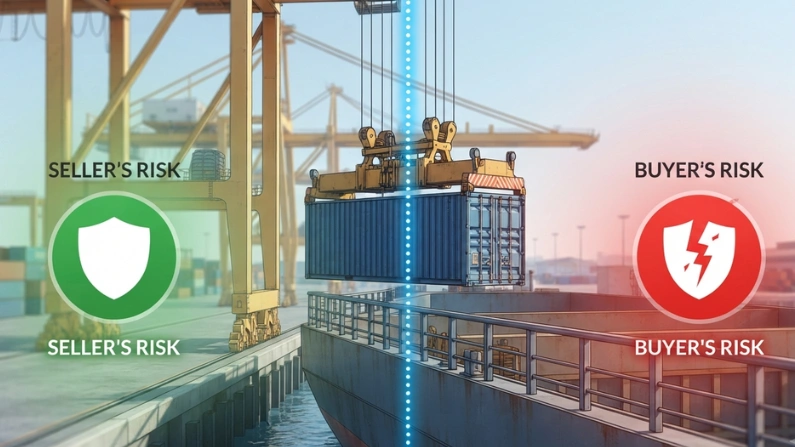
They clearly specify who pays for shipping costs, who handles customs clearance, who arranges insurance, and when the risk transfers from the seller to the buyer. They matter because they:
- Clarify costs – Define who pays for freight, insurance, loading, unloading, and customs duties.
- Allocate risk – Clearly state when the risk of loss or damage passes from the seller to the buyer.
- Reduce disputes – Provide internationally accepted rules that minimize misunderstandings and contractual conflicts.
- Simplify global trade – Help importers, exporters, and freight forwarders manage international shipments more efficiently.
The current Incoterms® 2020 include 11 rules: 7 for any mode of transport (EXW, FCA, CPT, CIP, DAP, DPU, DDP) and 4 for sea and inland waterway transport (FAS, FOB, CFR, CIF). Choosing the right Incoterm ensures smoother logistics, better cost control, and successful international shipping.
Types of Incoterms in Shipping
Incoterms for Any Mode of Transport
EXW (Ex Works)
If you’re wondering what is EXW in shipping, it is the Incoterm that places the greatest responsibility on the buyer. The seller simply makes the goods available at their premises, while the buyer handles loading, export customs clearance, transportation, insurance, import clearance, and final delivery. EXW is often chosen when buyers have established logistics networks and want complete control over the shipment.
FCA (Free Carrier)
Under FCA, the seller delivers the goods to a carrier or another party nominated by the buyer at an agreed location. The seller is responsible for export customs clearance, while the buyer arranges the main international transportation, insurance, import clearance, and delivery. FCA is widely used for containerized cargo and multimodal shipping because it provides greater flexibility than FOB.
CPT (Carriage Paid To)
With CPT, the seller pays the transportation cost to the agreed destination. However, the risk transfers to the buyer as soon as the goods are handed over to the first carrier. Although the seller covers freight costs, the buyer bears the transit risk after shipment begins.
CIP (Carriage and Insurance Paid To)
CIP is similar to CPT, but the seller must also purchase cargo insurance for the buyer’s benefit. Under Incoterms 2020, CIP requires a higher level of insurance coverage than previous versions. It is commonly used for high-value goods transported by air, road, rail, or multimodal transport.
DAP (Delivered at Place)
Under DAP, the seller is responsible for transporting the goods to the agreed destination. Once the shipment arrives and is ready for unloading, the risk transfers to the buyer. The buyer is responsible for import customs clearance, import duties, taxes, and unloading.
DPU (Delivered at Place Unloaded)
DPU is the only Incoterm where the seller is responsible for unloading the goods at the destination. After unloading, the buyer handles import customs clearance, duties, and any onward transportation. DPU is commonly used for machinery, project cargo, and oversized shipments requiring special unloading arrangements.
DDP (Delivered Duty Paid)
Many businesses ask what is delivered duty paid because it provides maximum convenience for buyers. Under DDP, the seller assumes almost all responsibilities, including export procedures, international transportation, customs clearance, import duties, taxes, and final delivery. The buyer simply receives the goods at the agreed location.
Incoterms for Sea and Inland Waterway Transport
FAS (Free Alongside Ship)
Under FAS, the seller delivers the goods alongside the vessel at the named port of shipment. From that point onward, the buyer is responsible for loading the cargo onto the ship, arranging ocean freight, insurance, import customs clearance, and delivery. FAS is commonly used for bulk cargo and heavy industrial goods.
FOB (Free On Board)
FOB is one of the most widely used Incoterms for sea freight. The seller is responsible for delivering and loading the goods onto the vessel selected by the buyer. Once the cargo is onboard, the risk transfers to the buyer, who then manages ocean freight, insurance, import procedures, and delivery.
CFR (Cost and Freight)
If you’re asking what is CFR in shipping, it means the seller pays the ocean freight to the destination port, but the risk transfers to the buyer once the goods are loaded onto the vessel at the origin port. Although the seller pays for transportation, the buyer is responsible for cargo insurance and assumes the shipping risk during transit.
CIF (Cost, Insurance and Freight)
Another common question is what is CIF in shipping. CIF is similar to CFR, but the seller must also arrange and pay for marine cargo insurance during transit. Once the goods are loaded onto the vessel, the risk still transfers to the buyer, even though the seller pays for freight and insurance. CIF is one of the most frequently used Incoterms for international ocean freight.
How to Choose the Right Incoterm for Your UAE Shipment
There’s no single “best” Incoterm – the right choice depends on your experience level, the trade lane, and how much control you want. A few practical questions to ask before finalizing a contract:
- Importing into or exporting from the UAE? Exporters often prefer EXW or FOB, since their obligations end early. Importers with limited experience tend to favor DAP or DDP, which shift customs and delivery risk onto the seller.
- Sea only, or multimodal? CIF, CFR, FAS, and FOB apply strictly to sea and inland waterway transport. If cargo might move by air or road too, CPT, CIP, or DDP offer more flexibility.
- How much do you trust your counterpart? Coordination-heavy terms like CIF or DDP work best with established trading relationships where both sides understand their obligations.
- Shipping through Jebel Ali or Khalifa Port? Port-specific handling charges and free-time allowances can shift the real cost of a term like CFR or CIF, so confirm local charges with your forwarder before committing.
Common Mistakes to Avoid With Incoterms
Even experienced shippers get tripped up on a few recurring issues:
- Confusing cost transfer with risk transfer. Under CFR and CIF, the seller pays freight to the destination port, but risk already passed once cargo was loaded – a distinction that matters if goods are damaged in transit.
- Assuming CIF means full insurance coverage. Sellers are only obligated to buy minimum coverage under CIF unless the contract specifies otherwise.
- Using FOB or FAS for containerized cargo. These terms suit break-bulk shipments loaded directly onto a vessel. For containers handed to a carrier at a terminal, FCA is usually more appropriate.
- Leaving the named place vague. Every Incoterm needs a precise location – “FOB Jebel Ali” is enforceable; “FOB UAE” is not. Vague named places are a common source of disputes.
Conclusion
Understanding Incoterms in shipping isn’t just a compliance exercise – it directly affects your landed costs, your exposure to risk, and how smoothly cargo moves from origin to destination. Whether you’re weighing EXW against DDP for a new supplier, or CFR against CIF for your next sea shipment, the right choice comes down to how much control you want versus how much you’re willing to hand off.
Still unsure which Incoterm fits your next shipment? Shipperlines’ team can walk you through the trade-offs for your specific cargo, route, and trading partner – so you’re not guessing when it’s time to sign the contract.
Frequently Asked Questions
1. Are Incoterms legally binding?
Incoterms themselves are not laws. They become legally binding only when both the buyer and seller agree to include a specific Incoterm (such as FOB or DDP) in their sales contract.
2. Do Incoterms determine ownership of goods?
No. Incoterms only define the responsibilities, costs, and transfer of risk between the buyer and seller. They do not determine when ownership or title of the goods changes hands.
3. Can Incoterms be used for domestic shipments?
Yes. Although Incoterms are primarily associated with international trade, they can also be used for domestic shipments if both parties agree to apply them in their contract.
4. Which Incoterm is best for first-time importers?
There is no single best Incoterm, but many first-time importers prefer DAP or DDP because the seller handles most of the transportation and logistics responsibilities, making the shipping process simpler.