
Essential Freight Forwarding Documentation | Step-by-Step Guide for Businesses
Managing international shipments starts with accurate freight forwarding documentation, and Shipperlines helps businesses streamline every stage of the process with expert logistics and customs support. Understanding the right shipping documents can reduce delays, ensure compliance, and keep your cargo moving efficiently across global markets.
Why Freight Forwarding Documentation Is Important

Proper freight forwarding documentation ensures that cargo complies with international trade regulations while providing all parties involved with accurate shipment information.
Well-prepared documentation helps businesses:
- Avoid customs delays
- Prevent shipment holds and penalties
- Ensure regulatory compliance
- Facilitate faster cargo movement
- Improve supply chain visibility
- Reduce operational risks
Key Documents Used in Freight Forwarding
International shipments require multiple documents depending on the cargo type, destination country, and transportation method.
Commercial Invoice
The commercial invoice is one of the most important shipping documents. It provides detailed information about the goods being transported and serves as the basis for customs valuation.
A commercial invoice typically includes:
- Seller and buyer information, Product descriptions, Quantity of goods
- Unit and total value, Currency used, Country of origin, Terms of sale
Customs authorities use this document to calculate duties and taxes.
Packing List
A packing list provides a detailed breakdown of shipment contents. It generally includes:
- Number of packages, Weight and dimensions, Packaging details
- Item quantities, Shipment references
The packing list helps customs officers, freight forwarders, and warehouse operators verify cargo contents during transit.
Bill of Lading (B/L)
The Bill of Lading is issued for sea freight shipments and serves as:
- A cargo receipt, A transportation contract, A document of title
It contains essential shipment information, including shipper details, consignee information, cargo description, and destination details.
Air Waybill (AWB)
For air freight shipments, the Air Waybill functions as the primary transport document.
The AWB contains:
- Shipment details, Airport information
- Cargo description, Freight charges
- Consignee and shipper information
Unlike a Bill of Lading, the Air Waybill is not a document of title.
Certificate of Origin
A Certificate of Origin confirms the country where the goods were manufactured or produced.
Many countries require this document to:
- Determine import duties, Apply trade agreements
- Verify product origin, Support customs processing
Import and Export Licenses
Certain products require government-issued licenses before they can be imported or exported.
These licenses may apply to:
- Food products, Medical supplies, Chemicals
- Industrial equipment, Restricted goods
Obtaining the correct permits before shipment prevents regulatory issues and customs delays.
Freight Forwarding Documentation for Export Shipments
Exporting goods involves several compliance requirements before cargo can leave the country. The documentation process generally includes:
Export Documentation Preparation
Before shipment, exporters must prepare:
- Commercial invoice, Packing list, Certificate of origin
- Export permits (if required), Transport documents
Ensuring accuracy at this stage reduces the risk of shipment delays later in the process.
Export Customs Submission
As part of the export procedure under customs, shipment details are submitted to customs authorities for review and approval. Customs officials verify:
- Cargo classification, Product declarations, Licensing requirements, Regulatory compliance
Once approved, the shipment can proceed for transportation.
Cargo Inspection and Clearance
Certain shipments may be selected for inspection before departure.
Following a successful review, customs authorities release the cargo for export, allowing it to move to the port, airport, or border crossing.
Understanding the Import and Export Clearance Procedure
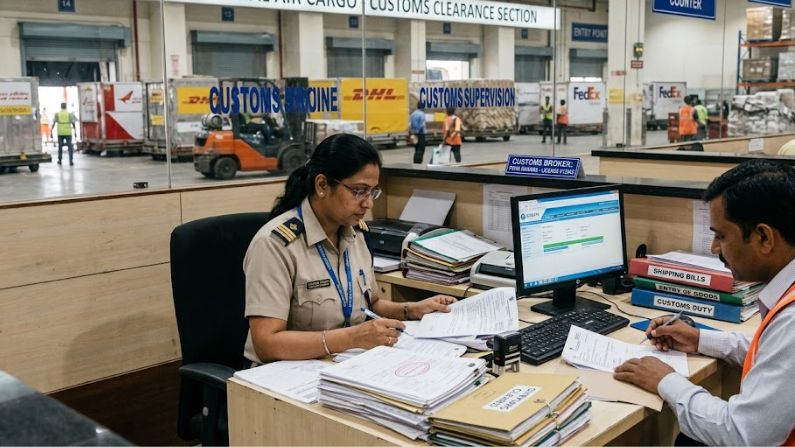
The import and export clearance procedure ensures that goods comply with national and international trade regulations. While specific requirements vary by country, the process generally follows similar steps.
For Export Shipments
The export clearance process typically includes:
- Document preparation, Customs declaration filing, Regulatory verification
- Cargo inspection (if required), Export approval and release
For Import Shipments
The import clearance process generally involves:
- Arrival notification, Submission of import documents, Customs duty assessment
- Cargo inspection, Import approval and cargo release
Proper documentation supports faster customs processing at both origin and destination.
Custom Clearance Procedure for Export Cargo
The customs clearance procedure for export is one of the most important stages in international shipping. A typical export customs clearance process includes:
Cargo Classification
Products must be classified under the correct tariff codes. Proper classification helps determine:
- Regulatory requirements, Export restrictions, Documentation needs
Customs Declaration Filing
Export declarations are submitted electronically or through customs-approved systems. The declaration includes:
- Exporter details, Cargo information, Destination country
- Product classification, Shipment value
Verification and Review
Customs authorities review the submitted information to ensure compliance with export regulations.
Clearance Approval
Once verification is completed, customs grants clearance and authorizes the shipment for departure. Efficient handling of the customs clearance procedure for export helps businesses avoid delays and maintain reliable delivery schedules.
Common Documentation Mistakes Businesses Should Avoid
Many shipment delays occur because of documentation errors rather than transportation issues.
Some common mistakes include:
1. Incorrect Product Descriptions: Vague or incomplete cargo descriptions can create customs complications.
2. Mismatched Information: Details on invoices, packing lists, and transport documents must match accurately.
3. Missing Certificates: Failure to provide required certificates may result in shipment holds.
4. Incorrect Tariff Classification: Improper classification can lead to penalties, delays, or incorrect duty calculations.
5. Incomplete Customs Forms: Missing information on customs declarations can delay cargo release.
Careful document verification before shipment helps prevent these issues.
How Shipperlines Supports Documentation and Customs Compliance
At Shipperlines, we help businesses simplify freight forwarding documentation through professional logistics and customs support services. Our team assists with document preparation, customs coordination, cargo compliance, shipment tracking, and international freight management.
Whether you are handling a single shipment or managing ongoing trade operations, we help ensure documentation accuracy and smoother cargo movement across international markets.
Conclusion
Accurate freight forwarding documentation is essential for successful international shipping. From commercial invoices and packing lists to customs declarations and transport documents, every document plays an important role in ensuring cargo moves efficiently across borders.
Understanding the import and export clearance procedure, the customs clearance procedure for export, and the overall export procedure under customs helps businesses reduce compliance risks and avoid costly shipment delays. By maintaining accurate documentation and partnering with experienced logistics professionals, organizations can improve supply chain performance and support long-term international trade growth.
Frequently Asked Questions
What is freight forwarding documentation?
Freight forwarding documentation refers to the collection of shipping, customs, and regulatory documents required for international cargo transportation.
Why is documentation important in freight forwarding?
Proper documentation ensures compliance with customs regulations, prevents shipment delays, and supports smooth cargo movement.
What documents are required for export shipments?
Common export documents include commercial invoices, packing lists, certificates of origin, transport documents, and export permits when applicable.
What is the custom clearance procedure for export?
It involves cargo classification, customs declaration filing, compliance verification, inspection when necessary, and export approval.
Can a freight forwarder handle shipping documentation?
Yes. Freight forwarders assist with document preparation, customs coordination, regulatory compliance, and shipment processing.