
LCL vs FCL Shipping: Which Is the Right Choice for Your Cargo?
LCL vs FCL shipping is one of the first decisions you’ll face when moving cargo by sea, and it directly affects your cost, speed, and cargo safety. This guide breaks down the key differences so you can choose the right option for your next shipment.
What Is LCL vs FCL Shipping?
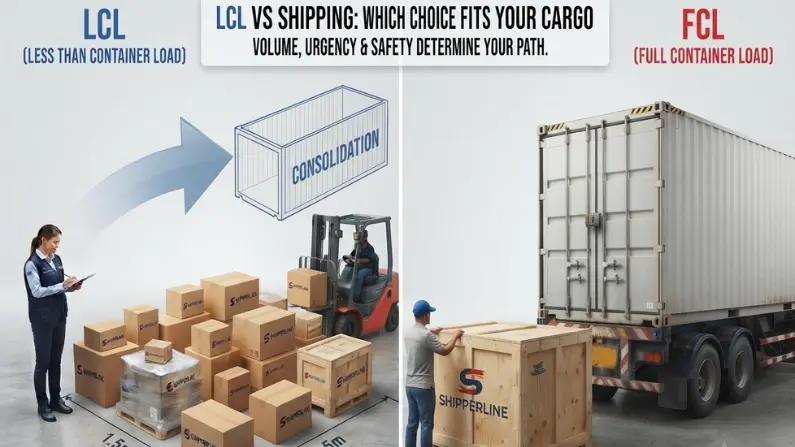
Before diving into the comparison, it helps to understand the basics of each method.
FCL (Full Container Load) means you book an entire container exclusively for your cargo. Even if your goods don’t fill the space, you’re the only shipper using that container – it’s sealed at origin and stays that way until it reaches its destination.
LCL (Less than Container Load) means your cargo shares container space with shipments from other businesses. You pay only for the volume your goods occupy, usually measured in cubic meters (CBM), while a logistics provider handles the consolidation and separation of everyone’s cargo along the way.
Understanding FCL vs LCL isn’t just a technical distinction – it directly shapes how much you pay, how quickly your goods arrive, and how much handling your cargo undergoes before it reaches its final destination.
FCL vs LCL Shipping: Key Differences
International shipments require multiple documents depending on the cargo type, destination country, and transportation method.
Shipment Volume
Volume is usually the first factor that decides which method makes sense. As a general rule, if your cargo is under roughly 13–15 CBM, LCL is typically the more practical and cost-effective choice. Once your shipment volume approaches or exceeds that range, FCL usually becomes the smarter option, since you’re effectively paying a flat rate regardless of how full the container is.
Cost Considerations
With LCL, you only pay for the space you use, which makes it accessible for smaller businesses or occasional shippers who don’t want to commit to a full container. However, per-unit costs can be higher due to consolidation and handling fees. FCL, on the other hand, involves a fixed cost for the whole container – which becomes more economical per unit as your shipment volume grows, even if the container isn’t packed to capacity.
Transit Time
This is one of the clearest differentiators in the LCL vs FCL comparison. FCL shipments move directly from origin to destination without the extra steps of grouping and separating cargo, which generally means faster, more predictable transit times. LCL shipments require consolidation at the origin port and deconsolidating at the destination, which naturally adds time and makes schedules more dependent on how quickly a container fills up with other shipments.
Cargo Safety and Handling
Because an FCL container is sealed at origin and only opened at the final destination, there’s minimal handling in between – reducing the risk of damage, loss, or contamination from other cargo. LCL shipments, by nature, go through more touchpoints: loading, sorting, and unloading alongside other shippers’ goods, which slightly increases the risk of delay or mishandling, especially for delicate or high-value cargo.
Flexibility
LCL shines when it comes to flexibility. It’s ideal for businesses that need to ship smaller, more frequent batches, or that are distributing goods to multiple destinations without the volume to justify a full container each time. FCL, by comparison, is best suited to single-destination, high-volume shipments where speed and security matter more than flexibility.
LCL vs FCL: Quick Comparison
| LCL (Less than Container Load) | FCL (Full Container Load) |
|---|---|
| Container is shared with other shippers | Container is exclusive to one shipper |
| Pay based on the CBM used | Pay a fixed rate per container |
| Best for shipments under ~13–15 CBM | Best for shipments above ~13–15 CBM |
| Generally slower because cargo requires consolidation | Generally faster with more direct routing |
| More cargo handling and more touchpoints | Less handling with a sealed container |
| More flexible for smaller, frequent shipments | Less flexible because it requires a full container and typically one destination |
LCL Shipping in the UAE: When It Makes Sense
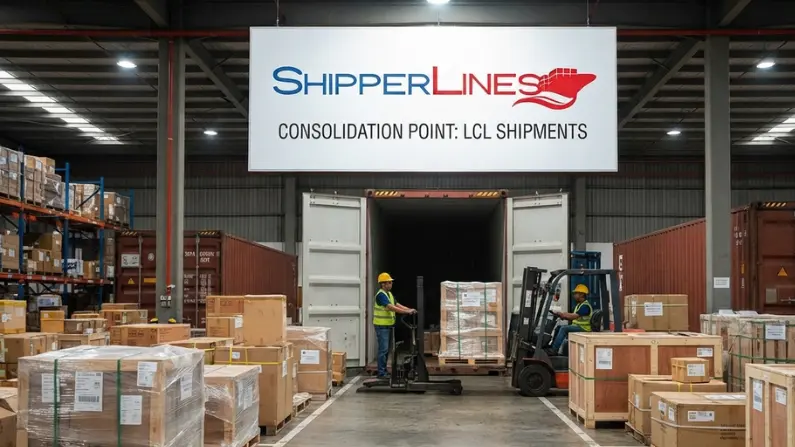
LCL shipping in UAE is a practical fit for smaller or irregular shipments — especially when importing through Jebel Ali or another UAE port.
- Ideal for SMEs and new market entrants
- Suited to irregular or seasonal shipment volumes
- Lets you ship on demand without tying up capital in a full container
- Scales gradually as your business grows
- Allows distribution to multiple destinations without needing a full container each time
FCL Shipping in Dubai: When It’s the Better Fit
On the other hand, FCL shipping Dubai businesses often turn to full container loads when they’re dealing with larger, high-value, or time-sensitive shipments. FCL shipping Dubai is the go-to choice when volume, value, or urgency call for a dedicated container.
- Best for larger, high-value, or time-sensitive shipments
- Suited to consistent shipment volumes (retail stock, industrial equipment, export goods)
- More predictable and cost-efficient per unit as shipment size grows
- Minimizes handling by avoiding shared container space
How to Decide: LCL or FCL for Your Business
There’s no single “better” option between LCL and FCL – it comes down to your specific shipment profile. Ask yourself:
- How much are you shipping? Smaller volumes usually favor LCL; larger volumes favor FCL.
- How urgent is the delivery? Time-sensitive cargo benefits from FCL’s direct routing.
- How valuable or fragile is your cargo? High-value or delicate goods are often safer with FCL’s sealed handling.
- How predictable is your shipping volume? Irregular or growing businesses may benefit from starting with LCL and shifting to FCL as volumes increase.
Many businesses don’t stick to just one method – they use a combination of both, depending on the shipment, the season, and the destination.
Container Consolidation Services: Making LCL Work for You
If you choose the LCL route, the quality of your container consolidation services matters just as much as the shipping method itself. A reliable logistics partner manages the grouping and separation of your cargo efficiently, minimizes handling delays, and ensures your goods are tracked and handled with care from origin to destination – helping you get many of the cost benefits of LCL without sacrificing reliability.
Conclusion
Choosing between LCL vs FCL shipping isn’t just a box-ticking exercise – it’s a decision that affects your bottom line, your delivery timelines, and the safety of your cargo. Whether you need the flexibility and cost savings of LCL shipping, or the speed and security of FCL, working with an experienced freight partner in the UAE ensures your cargo moves efficiently, whichever method you choose.
If you’re unsure which option fits your next shipment, our team can help assess your cargo volume, timeline, and budget to recommend the right solution – so you can focus on your business while we handle the logistics.
Frequently Asked Questions
1. Can I switch from LCL to FCL as my shipment volume grows?
Yes – many businesses start with LCL and move to FCL once volumes consistently near 13–15 CBM, to reduce cost per unit.
2. Does LCL take longer to clear customs than FCL?
Often, yes – LCL cargo shares a container with multiple consignees, which can slow down inspection and paperwork compared to FCL’s single-shipper clearance.
3. Should I insure fragile or high-value cargo differently for LCL vs FCL?
Yes – LCL cargo faces more handling, so proper packaging and cargo insurance become more important than with a sealed FCL container.
4. How exactly is LCL shipping cost calculated?
LCL is charged per cubic meter (or per revenue ton, whichever is greater) based on the space you use, plus handling and documentation fees.
5. Can a business use both LCL and FCL shipments?
Yes – many businesses mix both, using FCL for regular high-volume orders and LCL for smaller or urgent one-off shipments.